Sudan .. What is the greatest hidden .. “two bullets in the heart”
🔥 Sudan News ! 📰 Sudan .. What is the greatest hidden .. “two bullets in the heart”
📅 Published on: 2025-06-02 16:59:00
📝 Details:
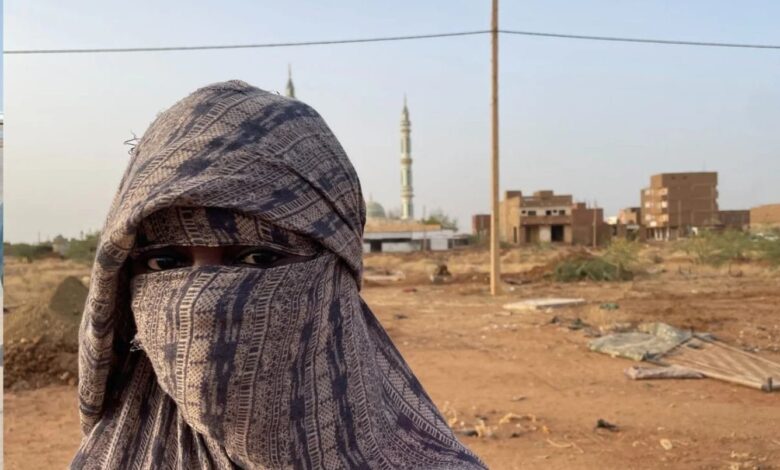
Written by Daniel Hilton and Mohamed Amin in Al -Salha, Omdurman, Sudan .. “I made a mistake when I tried to leave”: crossing the enemy lines in the heart of Sudan
I heard the hopes of Ismail enough. For two days, she was pleading with the Palmex Rapid Support Commander to tell her anything about her two brothers, son -in -law and cousin.
The last time they were seen withdrew from a truck carrying the Amal family and about 200 other individuals from the group of groups on a road from Al -Salih, which is an area on the outskirts of Omdurman, to the Sudanese city center.
The leader told her that some of the truck members were killed. And he ordered her to be patient. He said sharply: “The situation is tense, and the fate of its relatives will be revealed in the end.” She remembers the hopes of his saying: “
She left at home, recovered a phone that she had hidden and went to one of the few places where she was a sign.
The messages poured on them: videos posted by fighters on social media, showing them chanting a victory in front of naked men to the waist, and various text messages from friends asking if they are alive and in good health.
In one of these clips, fighters are fire on a group of detainees sitting on the ground, helpless. One of them says, “No one will survive.”
In another clip, piles of bodies are displayed, among which I saw Amal a man met under a car frame. Her brother, Muhammad, was a dead body. Its brother -in -law is seen, the goodness is Abraham, and he is flogging.
In the end, it turned out that at least 31 people were killed by the Rapid Support Forces.
“Goodness was brave. Even in the video, you can see him looking at the eyes of the man who was hitting him,” says Abraham’s wife, Rehab Ismail.
“We will not forgive the Rapid Support Forces for this, and we will never forget.” “We have been tortured”
The ordeal of Amal and Rehab began in late April, when their families and dozens of members of the tribe of the groups decided to leave the righteous in a convoy.
The suburb west of Khartoum was on the banks of the White Nile under the control of the Rapid Support Forces for two years.
Electricity was cut off, the food almost was absent, and the source of the only water was a bitter liquid extracted from a ground well, even the rapid support forces did not touch it. As Amal says, “Everything was bad.”
Most people accumulate in the truck, but few of them walked next to them in cars and other smaller vehicles.
To the north, Omdurman was the twin city of Khartoum, which was controlled by the Sudanese Armed Forces for months, and only had a little life.
But dozens of rapid support forces fighters were intercepting the caravan road. When they saw the truck heading towards them, they shot her tires and forced everyone to go down.
Five caravan members told Middle East Eye that they were subjected to skin, shooting and abuse. People were divided into groups of six people, and they were forced to enter small stores on both sides of the road.
“There, we were tortured,” says Youssef Hussein.
Hussein added that the fighters were obsessed with the fact that the convoy was made up of “groups”, claiming that the tribe is responsible for the killing of many of their comrades.
When Ali Wadaa, a member of the convoy, tried to claim to belong to another tribe, they killed him, Hussein says: “They fired two bullets in the heart.”
Amal, Rehab and other women were separated from the men.
Any money, gold, or mobile phones that were found. “If they see that you have money on a telephone banking application, they would like you to convert it to them as well,” she says.
After five hours of interrogation and threats, women were released, and they went to their homes.
On their way, three fighters objected and tried to force them to enter a house. Rehab refused, and one of them pressed her neck with a knife. When Amal intervened, they hit her so much that she almost lost consciousness.
The convoy members were released in batches. Ahmed Amin Abdel -Haq, a 23 -year -old student and a ring, was released, after five days of torture.
He was accused of belonging to a militia loyal to the Sudanese armed forces, but after paying a ransom of one million Sudanese pounds – about 500 US dollars – they released: “In the end, it was all about money.”
Good: the brutality of war
Muhammad’s body was last seen in the video outside the military intelligence headquarters of the Rapid Support Forces in Al -Salha, a sewing place turned into a dilapidated office.
A large mural of Muhammad Othman Ishaq, one of the martyrs of the Sudanese revolution in support of democracy, looks quietly from the wall of the office on the street. Isaac was killed during the June 30, 2019 protests that forced the army to share power with civilians.
Four or five kilometers from Omdurman, the righteous is a world away from modern villas along the Nile Street overlooking the city.
Although Al -Souk Street is brutal, its twisted kiosks and torn umbrellas, the ghosts of happy times feel the street with vitality and activity.
A few years ago, this place was the meeting point for thousands of Sudanese who demanded an end to tyranny and persecution, before their dreams were crushed by politics and the military coup, and now perhaps because of the most destructive civil war in Sudan.
Although the army and rapid support forces overthrew the Sudanese transitional civilian government in 2021, and later shared power, plans to include the latter to the regular army ignited a war that killed tens of thousands of people and displaced 13 million others.
Throughout the conflict period, the Rapid Support Forces targeted civilians with death, looting and sexual assault. The United States and many human rights organizations accused her of committing genocide in the west of the country.
Its main support is the United Arab Emirates, which denies its military support for the group, but nevertheless it seems that it supplies its weapons fighters.
The Sudanese army, which the United States also imposed sanctions for alleged war crimes, seized the town of Al -Salha on May 19, and declared full control of Khartoum State for the first time since the war began.
A few days later, the bodies are still discovered.
Brigadier General Al -Raya, God, who is an officer in the Sudanese army, says that the work is still underway to retrieve the bodies of the rapid support forces soldiers from the streets. As for their victims, their presence is discovered in unfamiliar places.
He added, “Even the bodies of buried under the flooring of the house were found.”
According to the army, the tombs of “the bodies of 465 people were found died as a result of neglect, lack of food, treatment and medicine”, including cemeteries that include up to 27 people.
Prominent bodies
In a morgue at a university uses the Rapid Support Forces as a rule, three tanks carry about 20 bodies. Some of them are severely analyzed and collapse in a dark swamp.
Some bodies still carry clear features, as well as holes in their sides and cracks in their feet.
The Sudanese Armed Forces say they are victims of the Rapid Support Forces; While the paramilitary forces insist that they are just bodies used by students. Elsewhere, there are less controversial burial sites: large, newly covered potholes, with the smell of rotting corpses.
Outside the police station, the fighters turned into a detention center, an improvised cemetery was established in a square. Families, blankets and brushes that were used to transport the bodies here are neglected, bloodshed.
Ibtisam Ayyad, a teacher, watched the cemetery to expand quickly under the rule of the Rapid Support Forces.
Ayad is the village of Al -Salha, which I knew before the war. “It was a beautiful place to live in, safe,” she says.
According to Ayyad, many good women talk about being harassed or kidnapped. “Even the rapid support forces took the daughters of our neighbors,” she added.
In response to the popular anger raised by the videos circulating of the Al -Saha massacre, a local support forces officer claimed that the detainees were members of the Al -Bara Bin Malik Brigade, a hard -line militia fighting alongside the Sudanese armed forces.
However, the Rapid Support Forces later denied any relationship with the video.
Hope, Rehab and dozens of other righteous inhabitants are in a state of uncertainty. They suspect in the worse, but without the corpse, it is impossible to overcome it.
To this day, we don’t know exactly who was killed, Amal says. “Our father goes to the morgue looking for our missing. The painful is more, not to know whether they were killed or survived.”
Traffic in front of the newly engraved graves has become a frustrated routine. “Some are talking about opening it in search of answers,” she says.
Source Middle East Eye
📢 Hashtags: #Sudan #greatest #hidden #bullets #heart