Aviation accidents in Sudan … painful facts
🔥 Sudan News ! 📰 Aviation accidents in Sudan … painful facts
📅 Published on: 2025-06-21 17:51:00
📝 Details:
Books- Ibrahim Adlan, under the title (Airline accidents record in Sudan: painful facts and possible solutions 2/2, saying: Among the most prominent causes of incidents: Sudan’s dependence on bright Antonov and Ilyushin models.
International sanctions prevented the fleet from being updated or the purchase of original spare parts.
There is no ceiling for the age of operating aircraft despite the issuance of the note 80.
Registration of aircraft in Gambia without adhering to the terms of Wet lease contracts.
The most important accidents:
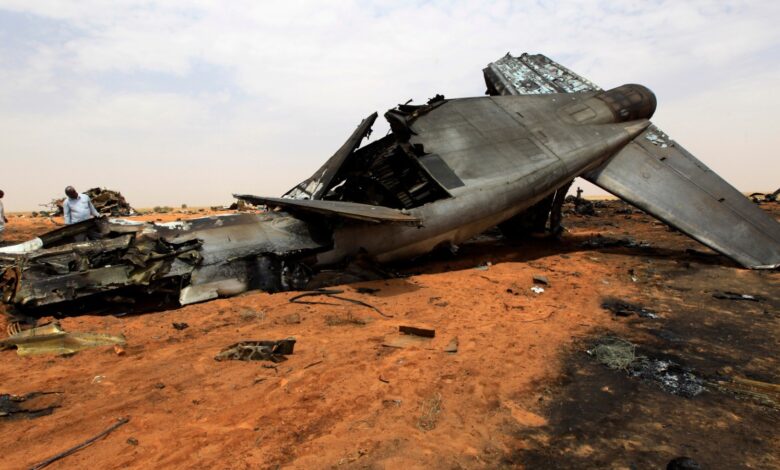
Flight 139 (2003): The old Boeing 737 fell and 116 passengers were killed
• Talodi (2012): Antonov was destroyed and killed senior officials
The destruction of a number of aircraft at Khartoum Airport during the war (2023-2024)
Good steps:
Badr and Tarko have already started adding newer planes
Go to update the fleet and raise the efficiency of operation.
What is required now:
1. Sudan joins the Cape Town Convention to facilitate the financing of aircraft.
2. Temporary freezing of the memo 80 and setting new flexible standards.
3. The requirement of EASA or FAA certificates for new aircraft.
4. A comprehensive review of rental and external registration contracts.
Flying in Sudan deserves a flexible and safe system that does not hold the future in yesterday’s aircraft.
Towards a radical reform: joining Cape Town protocols and modifying the organizational environment
In light of the limited resources and the difficulty of financing new aircraft, it is necessary for the Sudanese government represented by the General Authority of Civil Aviation to take bold legal and legislative steps, including:
First: Join Cape Town Civil Aviation protocols
The Cape Town Convert & Aircraft Protocol is one of the basic legal tools recognized globally, which the signed countries are granted:
• Facilities in financing and acquiring aircraft through an international guarantee system.
• Flexibility in the registration of aircraft in the international aircraft registry (IR).
• The ability to attract rental and financing companies with higher confidence, which reduces rental costs or deferred purchase.
The absence of Sudan from this agreement deprives it of realistic opportunities to introduce new aircraft in a competitive financing method.
Second: A temporary freezing of the note 80 and its restructuring
Despite the importance of organizational note No. 80, which aimed to protect Sudan’s record from the turbulent planes, the current reality – especially in light of the war – imposes a temporary freezing of the memo and re -evaluating it based on:
• Apply new criteria (New Criteria) that includes:
• Looking at the operating record of the plane instead of its age only.
• Acceptance of relatively old aircraft, provided that they obtained approved maintenance and a modern validity certificate from a reference side.
• Encouraging the import of aircraft available in the international rental market, especially those that temporarily emerged from service due to the decline in global demand after the pandemic.
Third: The mandatory connection with EASA/FAA certificates for used aircraft
Whether the plane is new or used, the link to the final acceptance to it is:
• Provides a validity certificate from the European Aviation Authority (EASA) or
• The American Federal Authority (FAA)
It is a strong professional guarantee that raises the level of safety, and increases the confidence of insurance companies and maintenance and operating companies in Sudan.
Strategic conclusion:
Joining Cape Town protocols, updating the memo 80 with flexible technical standards, and linking the validity of the aircraft to the standards of Easa/FAA, is the trilogy of the true reform of the aviation sector in Sudan, away from patchwork solutions.
With the approaching reconstruction phase after the war, this approach pave the way for air sovereignty on modern and sustainable foundations.
Positive direction: the fleet updating despite the gaps
Despite the above notes on external registration and the lack of full commitment to the conditions of rent, the Badr and Tarko company is calculated to take practical steps to modernize the air fleet in recent years, through:
• Add new and more efficient models, such as:
Boeing 737‑800 (NG)
• Embraer E‑jet
• And some modern Airbus models
• Trying to diversify aircraft sources outside the traditional Russian/Ukrainian market, which is a strategic direction towards:
• Improving operating efficiency,
• Reducing fuel consumption,
• Raising air safety indicators with insurance companies and regional safety agencies.
Balanced summary:
The move of the fleet is a benign and required trend, but this progress remains incomplete unless it is accompanied by:
• A strict commitment to the temporary operating controls of the aircraft registered outside Sudan,
• Merging these planes under the umbrella of Sudanese technical control periodically,
• Documentation of legal periods for each rental contract or phased operation.

📢 Hashtags: #Aviation #accidents #Sudan #painful #facts